

Performance marketing is all about measurable results. Unlike traditional marketing, where success can sometimes be difficult to quantify, performance marketing allows businesses to track exactly how their campaigns are performing and how much they are spending to achieve specific results.
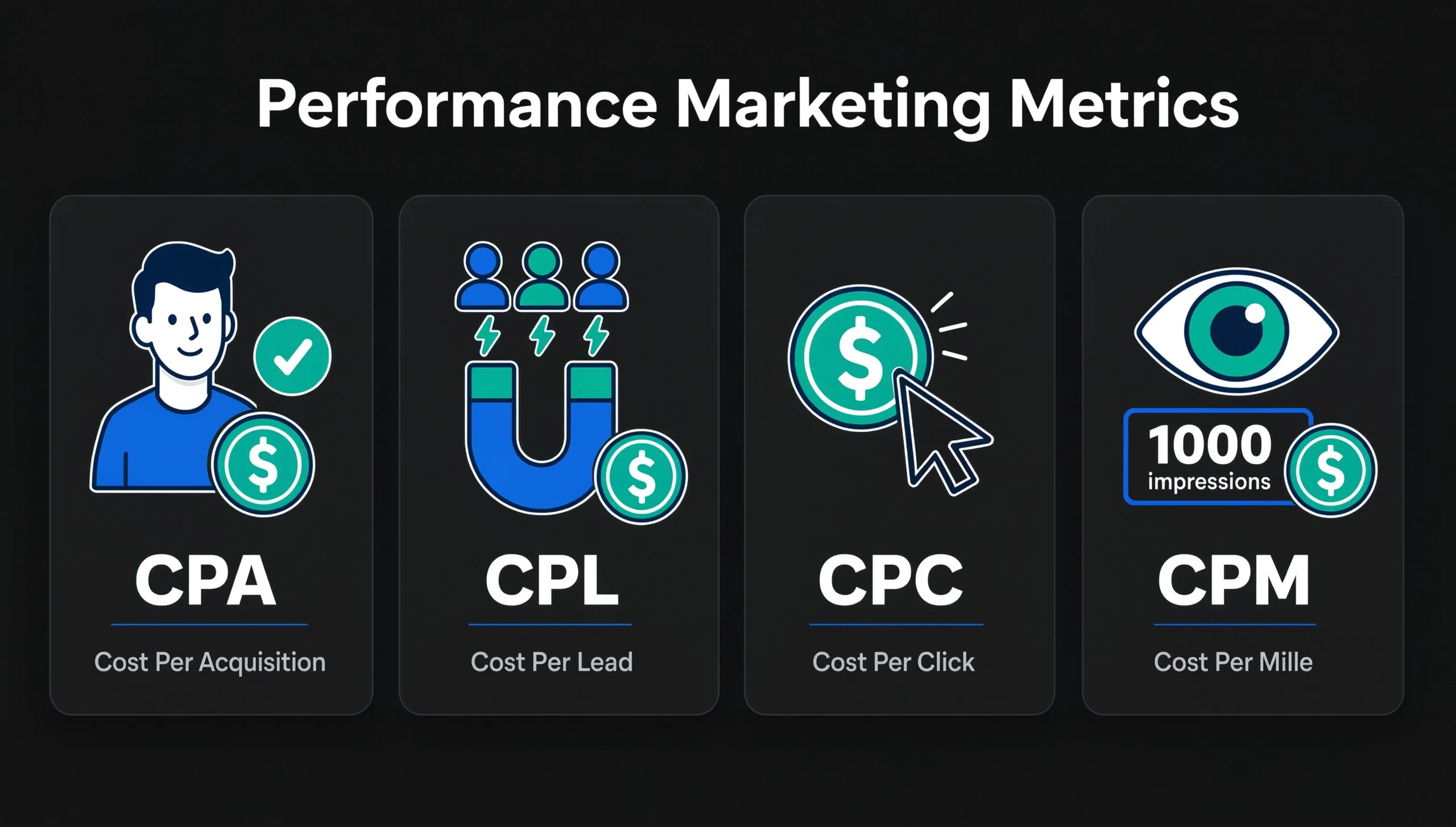
To measure campaign performance effectively, marketers rely on key performance marketing metrics such as CPA, CPL, CPC, and CPM. These metrics help businesses understand advertising costs, audience engagement, lead generation, and conversions.
Whether you are running Meta Ads, Google Ads, or other paid campaigns, understanding these digital marketing metrics is essential for making better marketing decisions.
What Are Performance Marketing Metrics?
Performance marketing metrics are measurable indicators used to evaluate the effectiveness of digital advertising campaigns. They help marketers understand whether a campaign is generating the desired results within the allocated budget.
Some of the most commonly used metrics include:
- CPA – Cost Per Acquisition
- CPL – Cost Per Lead
- CPC – Cost Per Click
- CPM – Cost Per Mille
- CTR – Click-Through Rate
- Conversion Rate
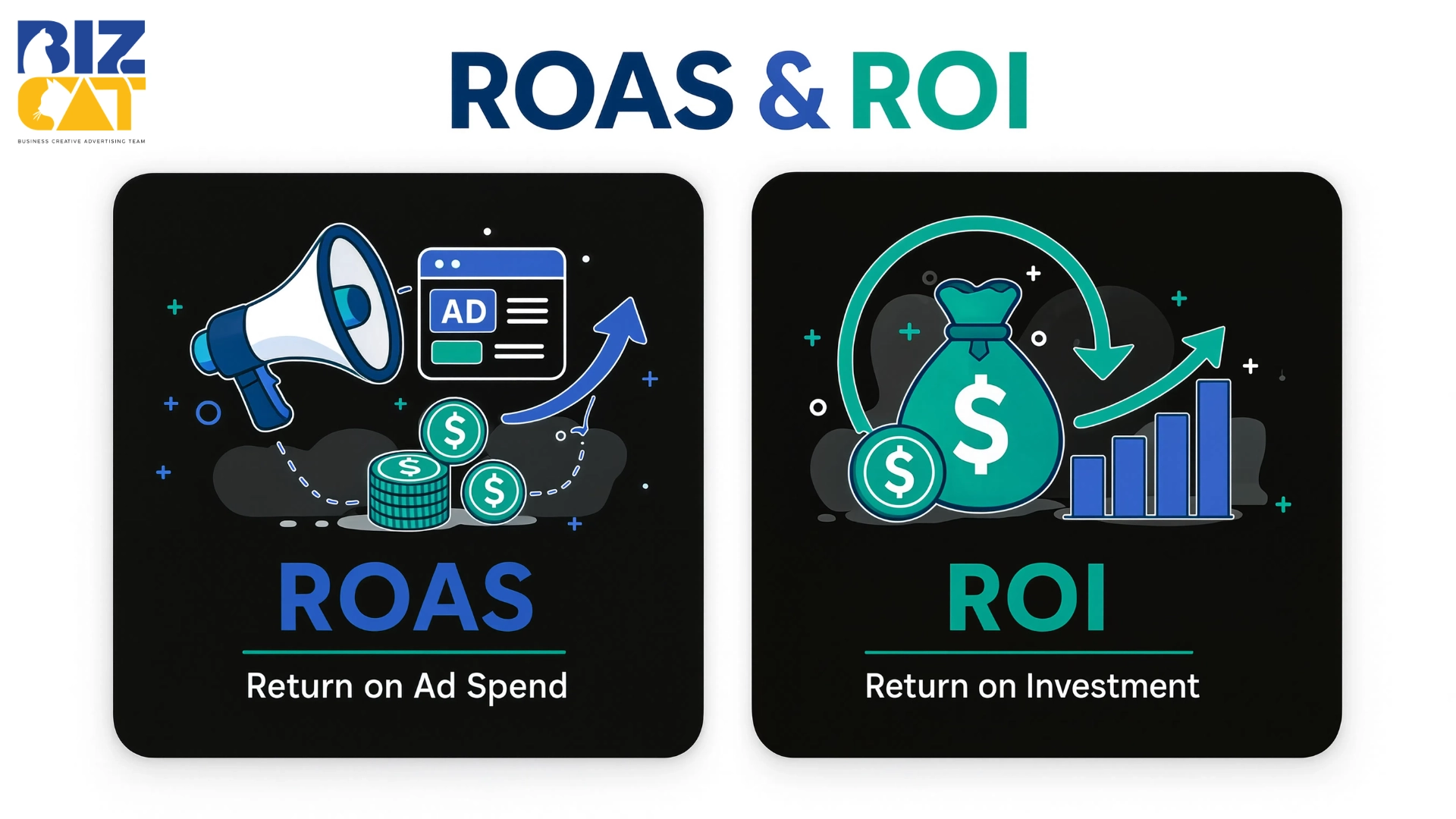
- ROAS – Return on Ad Spend
These metrics form an important part of performance marketing measurement and help businesses optimise campaigns based on actual data rather than assumptions.
What Is CPA (Cost Per Acquisition)?
CPA stands for Cost Per Acquisition. It measures how much a business spends, on average, to acquire one customer or complete a desired conversion.
CPA Formula
CPA = Total Advertising Cost ÷ Number of Conversions
For example, if you spend ₹20,000 on an advertising campaign and generate 100 customers:
CPA = ₹20,000 ÷ 100 = ₹200
Your cost per acquisition is ₹200.
Why Is CPA Important?
CPA is particularly useful when your main objective is conversions or sales. It helps businesses understand whether the amount spent to acquire customers is financially sustainable.
A lower CPA can indicate a more cost-efficient campaign, but the ideal CPA depends on your product price, profit margin, customer lifetime value, and business goals.
What Is CPL (Cost Per Lead)?
CPL stands for Cost Per Lead. It measures the average amount spent to generate one potential customer or lead.
This metric is commonly used for businesses that collect enquiries through lead forms, landing pages, WhatsApp, calls, or other channels.
CPL Formula
CPL = Total Advertising Spend ÷ Total Number of Leads
For example, if a campaign spends ₹15,000 and generates 150 leads:
CPL = ₹15,000 ÷ 150 = ₹100
The campaign’s cost per lead is ₹100.
Why Is CPL Important?
CPL helps businesses evaluate the efficiency of lead-generation campaigns. However, a low CPL does not automatically mean a campaign is successful.
For example, Campaign A may generate 200 leads at ₹75 per lead, while Campaign B generates 100 leads at ₹150 per lead. If the leads from Campaign B are more qualified and generate more sales, Campaign B may actually deliver better business results.
Therefore, CPL should always be analysed alongside lead quality and conversion rates.
What Is CPC (Cost Per Click)?
CPC stands for Cost Per Click. It represents the average amount an advertiser pays for each click on an advertisement.
CPC Formula
CPC = Total Advertising Cost ÷ Total Clicks
For example, if you spend ₹5,000 and receive 1,000 clicks:
CPC = ₹5,000 ÷ 1,000 = ₹5
Your average CPC is ₹5.
Why Is CPC Important?
CPC is useful for understanding how efficiently your campaign is generating traffic. A lower CPC can allow you to generate more clicks within the same budget.
However, inexpensive clicks are not necessarily valuable clicks. The real objective is to attract the right audience and encourage them to take meaningful actions after clicking the advertisement.
What Is CPM (Cost Per Mille)?
CPM stands for Cost Per Mille, where “mille” means one thousand. CPM measures the cost of advertising 1,000 times.
CPM Formula
CPM = (Total Advertising Cost ÷ Total Impressions) × 1,000
For example, if you spend ₹3,000 and receive 100,000 impressions:
CPM = (₹3,000 ÷ 100,000) × 1,000 = ₹30
Your CPM is ₹30.
Why Is CPM Important?
CPM is especially useful for awareness and reach campaigns. It helps marketers understand how efficiently they are getting their advertisements in front of their target audience.
Unlike CPA or CPL, CPM does not directly measure leads or sales. Instead, it focuses on the cost of gaining visibility.
CPA vs CPL vs CPC vs CPM
Although all four metrics measure advertising performance, they focus on different stages of the customer journey.
| Metric | Meaning | Measures | Best Used For |
| CPA | Cost Per Acquisition | Cost of acquiring a customer/conversion | Sales & conversions |
| CPL | Cost Per Lead | Cost of generating a lead | Lead generation |
| CPC | Cost Per Click | Cost of generating a click | Traffic & engagement |
| CPM | Cost Per Mille | Cost of 1,000 impressions | Awareness & reach |
Understanding these differences helps marketers select the right metric according to their campaign objective.
Which Performance Marketing Metric Should You Focus On?
There is no single metric that determines whether a campaign is successful. The right metric depends on your marketing objective.
For Brand Awareness
Focus on:
- CPM
- Reach
- Impressions
- Video views
For Website Traffic
Focus on:
- CPC
- CTR
- Landing page views
- Engagement rate
For Lead Generation
Focus on:
- CPL
- Lead quality
- Conversion rate
- Cost per qualified lead
For Sales
Focus on:
- CPA
- Conversion rate
- ROAS
- Revenue
- Customer acquisition cost
The best approach is to evaluate multiple digital marketing metrics together instead of relying on one number.
Understanding Performance Marketing KPIs
Performance marketing KPIs are key performance indicators used to determine whether campaigns are achieving predefined business objectives.
Some important KPIs include:
- Cost Per Acquisition
- Cost Per Lead
- Cost Per Click
- Cost Per Mille
- Click-Through Rate
- Conversion Rate
- Return on Ad Spend
- Customer Acquisition Cost
- Cost Per Qualified Lead
For example, a lead-generation campaign should not be judged only by CPL. If the campaign generates inexpensive but irrelevant leads, the business may still lose money.
This is why performance marketing measurement should connect advertising metrics with actual business outcomes.
How to Improve Your Performance Marketing Metrics?
Tracking metrics is only the first step. Marketers also need to continuously optimize campaigns.
1. Define Clear Campaign Objectives
Determine whether your campaign is designed for awareness, traffic, leads, sales, or another specific goal. Your objectives should determine which metrics you prioritise.
2. Target the Right Audience
Poor audience targeting can increase CPC, CPL, and CPA. Use audience data, customer insights, demographics, interests, and behaviour to reach people who are more likely to convert.
3. Test Different Creatives
Experiment with different ad images, videos, headlines, copy, and calls to action. A small creative change can significantly influence CTR, CPC, and conversion rates.
4. Optimise Landing Pages
Getting clicks is not enough. If your landing page is slow, confusing, or lacks a clear call to action, visitors may leave without converting.
5. Monitor Lead Quality
For lead-generation campaigns, evaluate what happens after a lead is generated. Track qualified leads, proposals, sales, and revenue to understand the true value of your campaigns.
6. Analyse Campaign Data Regularly
Regular analysis helps identify high-performing audiences, creatives, placements, keywords, and campaigns. This allows marketers to allocate budgets where they are generating better results.
Common Mistakes When Measuring Performance Marketing
Businesses sometimes focus too heavily on individual metrics. Here are a few common mistakes to avoid:
Focusing only on low CPC:
Cheap clicks are not valuable if they do not generate leads or sales.
Choosing the lowest CPL:
A campaign with a higher CPL may generate better-quality leads and more conversions.
Ignoring conversion rates:
Traffic and leads matter, but businesses ultimately need meaningful actions and revenue.
Not tracking the complete customer journey:
A lead generated through an advertisement should be tracked through follow-ups, proposals, purchases, and revenue whenever possible.
Comparing unrelated campaigns:
Different campaigns have different objectives, audiences, and conversion goals. Always compare campaigns within the right context.
Why Data-Driven Measurement Matters
Effective performance marketing is not simply about spending more on advertisements. It is about understanding where your budget is going and whether that investment is producing meaningful results.
By monitoring performance marketing metrics, businesses can identify what works, reduce wasted advertising spend, improve targeting, and make data-driven decisions.
The combination of CPA, CPL, CPC, CPM, conversion rate, and other performance marketing KPIs provides a clearer picture of campaign performance and helps businesses continuously improve their marketing strategy.
Grow Your Business with Bizcat
At Bizcat, we believe successful digital advertising starts with measurable results. As a performance-driven digital marketing agency, we help businesses plan, launch, monitor, and optimize campaigns based on their specific business goals.
From lead generation and customer acquisition to campaign optimisation and performance tracking, we use data to understand what is working and where improvements can be made.
As the best performance marketing agency in Calicut, our approach focuses on connecting marketing activities with meaningful business outcomes. We analyse important digital marketing metrics, track relevant performance marketing KPIs, and continuously optimise campaigns to improve efficiency and maximise returns.
If you’re looking for the best digital marketing agency in Calicut to build a data-driven advertising strategy, Bizcat can help turn your marketing budget into measurable growth.
Final Thoughts
CPA, CPL, CPC, and CPM are some of the most important metrics in performance marketing. Each metric provides a different perspective on campaign performance, from visibility and traffic to leads, customers, and conversions.
The key is not to chase the lowest number. Instead, businesses should identify the metrics that align with their objectives and analyse them together.
With the right performance marketing measurement strategy, businesses can make smarter decisions, optimize advertising budgets, and build campaigns that deliver measurable and sustainable results.
FAQs
Why is CPL important in digital marketing?
CPL helps businesses understand how much they spend to generate each lead and evaluate the efficiency of lead-generation campaigns.
How do you measure performance marketing success?
Performance marketing success can be measured by analysing relevant KPIs such as CPL, CPA, CPC, CPM, conversion rate, ROAS, lead quality, and revenue.
What is the difference between CPA and CPL?
CPA measures the cost of acquiring a customer or completed conversion, while CPL measures the cost of generating a lead.
How can businesses reduce their CPA?
Businesses can reduce CPA by improving audience targeting, testing creatives, optimising landing pages, improving conversion rates, and reallocating budgets toward high-performing campaigns.