

Businesses operating in the modern online marketplace can no longer rely on just having a website or social media presence to attract customers and drive growth. With audiences spread across search engines, social platforms, email inboxes, and countless digital touchpoints, marketing has become more dynamic and competitive than ever. This raises an important question for many brands: What is the difference between performance marketing and digital marketing?
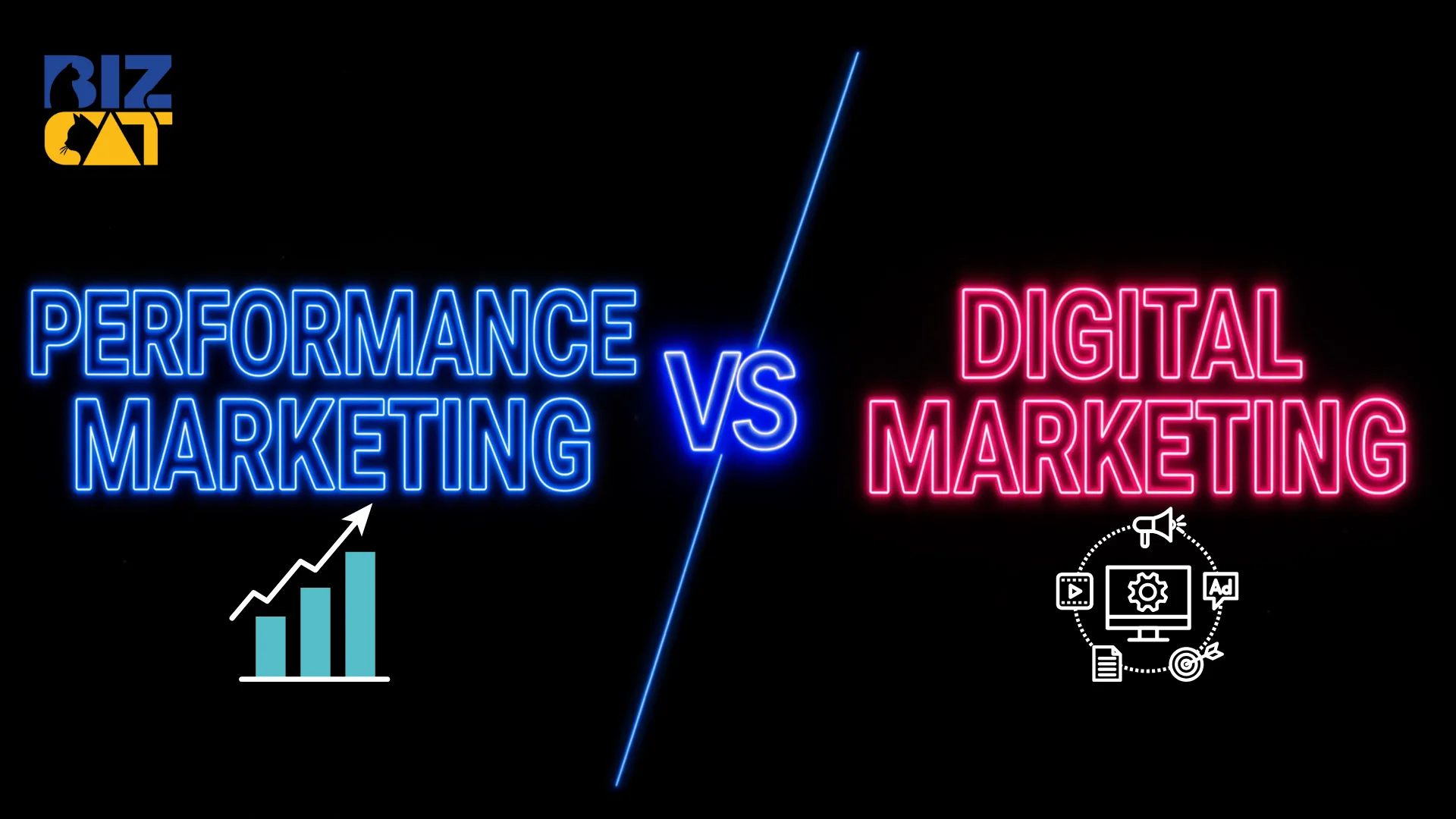
Although Performance Marketing vs Digital Marketing is often discussed as if they are two completely different fields, they are closely connected. Digital marketing is a broad umbrella that includes multiple online marketing activities, while performance marketing is a more results-driven approach that focuses heavily on measurable outcomes such as leads, sales, conversions, and revenue.
Understanding the difference between performance marketing and digital marketing can help businesses choose the right strategy, allocate their marketing budget effectively, and achieve better results.
What Is Digital Marketing?
Digital marketing refers to promoting products, services, or brands through digital channels. It covers a wide range of marketing activities designed to build visibility, attract audiences, engage customers, and drive business growth online.
Digital marketing can include both organic and paid methods. Some strategies focus on immediate results, while others are designed to build long-term brand awareness and authority.
Common digital marketing channels include:
- Search Engine Optimization (SEO)
- Social Media Marketing (SMM)
- Search Engine Marketing (SEM)
- Content Marketing
- Email Marketing
- Influencer Marketing
- Online Advertising
- Affiliate Marketing
- Video Marketing
Digital Marketing Strategies
Effective digital marketing strategies depend on a business’s goals, target audience, industry, and available resources. A business may use SEO to improve organic visibility, social media to engage its audience, content marketing to build authority, and paid advertising to generate immediate traffic.
The main objective is not always a direct sale. Digital marketing can also focus on building brand recognition, improving customer relationships, increasing website traffic, generating leads, and establishing long-term online visibility.
What Is Performance Marketing?
What is performance marketing? Performance marketing is a results-oriented form of digital advertising where campaigns are optimized around measurable actions or outcomes.
Instead of focusing only on impressions or reach, performance marketing places greater emphasis on actions such as:
- Website conversions
- Qualified leads
- Product sales
- App installations
- Form submissions
- Phone calls
- Registrations
- Revenue generation
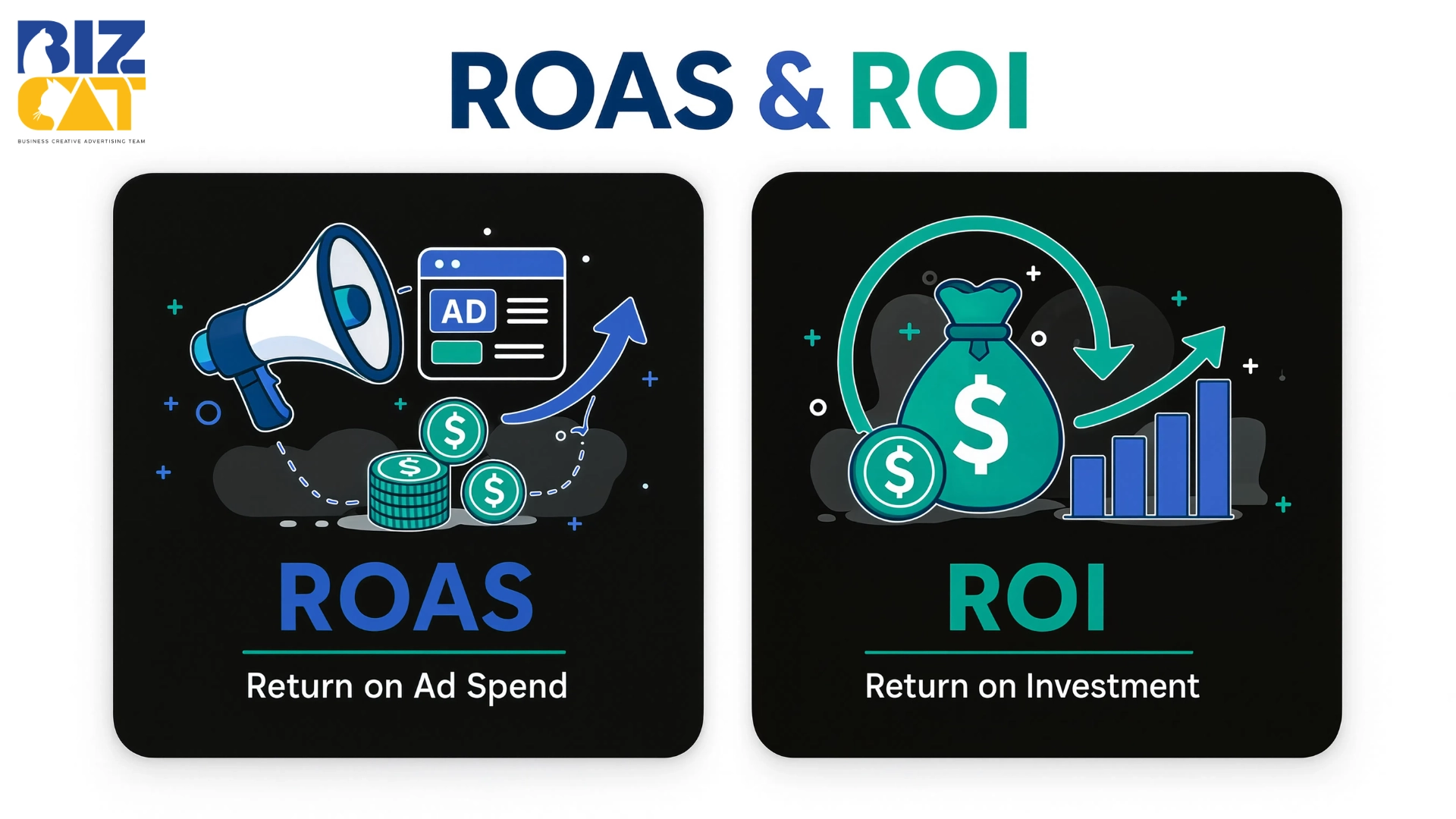
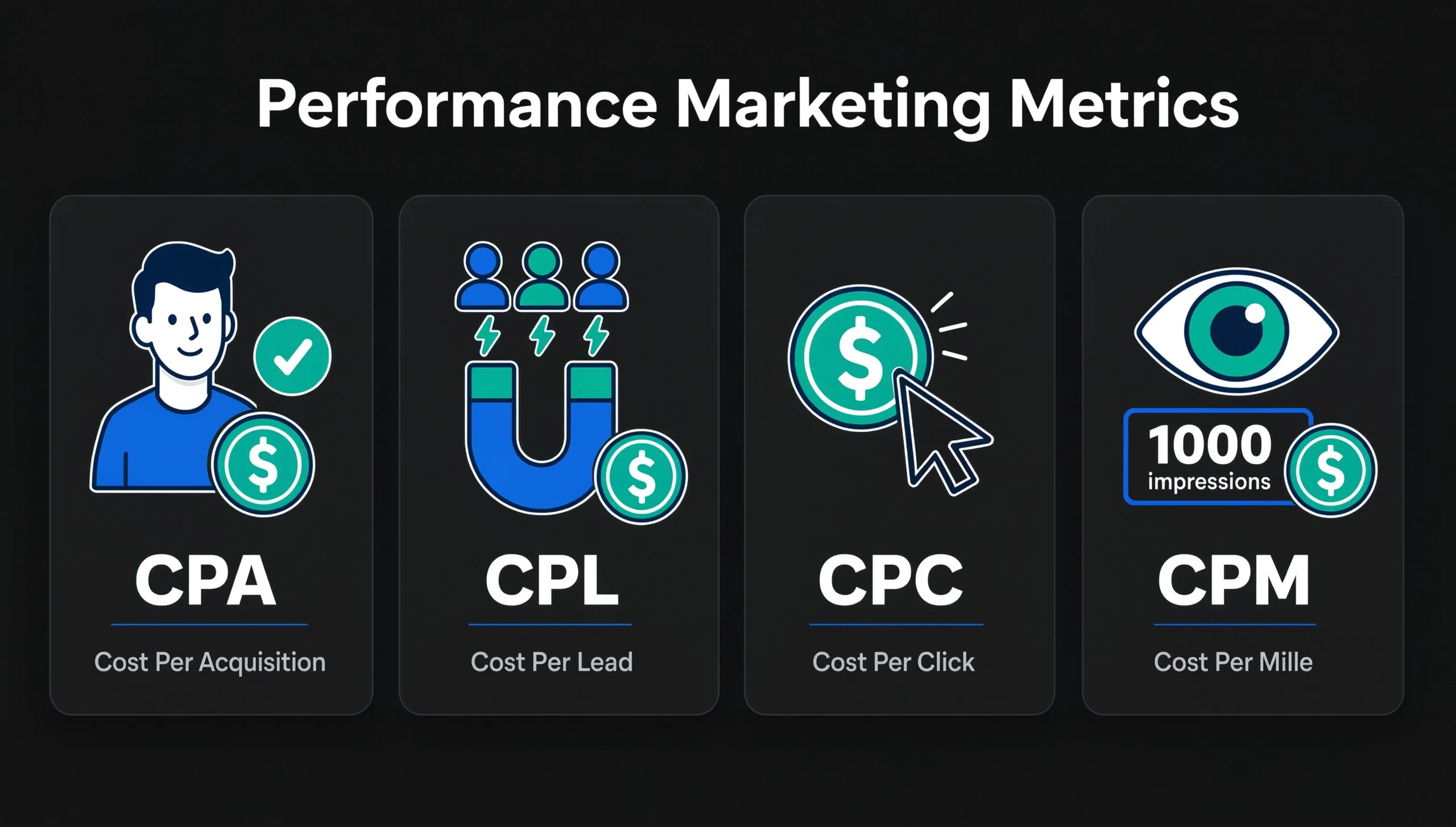
Performance marketing allows marketers to track campaign performance and make data-driven decisions. Businesses can monitor metrics such as Cost Per Click (CPC), Cost Per Lead (CPL), Cost Per Acquisition (CPA), Return on Ad Spend (ROAS), and conversion rates.
Performance Marketing Strategies
Successful performance marketing strategies are built around measurable goals and continuous optimization. Some commonly used strategies include:
1. Paid Search Advertising
Search advertising helps businesses appear when potential customers actively search for relevant products or services. Campaigns can be optimized based on keywords, audience intent, conversion data, and advertising costs.
2. Social Media Advertising
Platforms such as Instagram and Facebook allow businesses to target audiences based on demographics, interests, behaviors, and online activity. Campaigns can be optimized for leads, sales, website traffic, or other conversion goals.
3. Retargeting
Retargeting campaigns reach people who have previously interacted with a website, advertisement, or social media profile. This helps businesses reconnect with users who may not have converted during their first interaction.
4. Conversion Rate Optimization
Performance marketing does not stop at bringing visitors to a website. Landing pages, forms, calls to action, website content, and user experience can all be optimized to increase the percentage of visitors who take the desired action.
5. Data-Driven Campaign Optimization
Performance campaigns generate valuable data. Marketers can analyze audience behavior, ad performance, conversion rates, and acquisition costs to identify what is working and adjust campaigns accordingly.
Performance Marketing vs Digital Marketing: Key Difference
The simplest way to understand the Performance marketing vs digital marketing difference is to think of digital marketing as the larger category and performance marketing as a results-focused approach within it.
| Factor | Digital Marketing | Performance Marketing |
| Scope | Broad | More focused |
| Main focus | Brand visibility, engagement, traffic, leads, sales | Measurable conversions and business results |
| Channels | SEO, SMM, content, email, paid ads, and more | Mainly measurable paid campaigns and conversion-focused channels |
| Measurement | Traffic, engagement, rankings, reach, leads, sales | CPL, CPA, ROAS, conversions, revenue |
| Approach | Can be organic or paid | Primarily performance and results-driven |
| Time frame | Short-term and long-term | Often focused on measurable and trackable outcomes |
| Optimization | Based on multiple marketing goals | Continuously optimized around performance data |
Difference Between Performance Marketing and Digital Marketing
One of the biggest differences is the primary objective.
Digital marketing focuses on creating a strong online presence and connecting with the target audience through different digital channels. For example, an SEO campaign may take several months to build organic visibility and authority.
Performance marketing focuses more directly on measurable actions. If a company launches a lead-generation campaign, the performance marketing team can track how many leads were generated, how much each lead cost, and which advertisements produced the best results.
Another important distinction is measurement. While digital marketing can include metrics such as impressions, engagement, traffic, rankings, and brand awareness, performance marketing typically gives greater importance to conversion-based metrics.
However, these approaches should not be treated as competitors. Performance Marketing vs Digital Marketing is not necessarily an either-or decision. Businesses can use both approaches together.
How Digital Marketing and Performance Marketing Work Together?
A strong digital presence can support performance campaigns, while performance campaigns can generate data and conversions that strengthen the overall marketing strategy.
For example, a business may use:
SEO → Content Marketing → Social Media → Paid Advertising → Landing Page → Lead Conversion
SEO and content marketing can build organic visibility over time. Social media can create engagement and awareness. Paid performance campaigns can then target high-intent audiences and drive them toward optimized landing pages.
This combination allows businesses to balance long-term brand growth with short-term measurable results.
Which One Is Better for Your Business?
There is no universal answer. The right approach depends on your business goals.
Digital marketing may be ideal if your goal is to:
- Build long-term online visibility
- Increase brand awareness
- Improve organic search rankings
- Build an engaged audience
- Establish authority in your industry
- Create long-term customer relationships
Performance marketing may be ideal if your goal is to:
- Generate leads quickly
- Increase online sales
- Track advertising ROI
- Reduce customer acquisition costs
- Scale successful campaigns
- Optimize marketing spend based on data
For many businesses, combining both approaches provides the strongest results.
Why Choose Bizcat for Performance Marketing in Calicut?
At Bizcat, we understand that successful marketing is not simply about getting more clicks or impressions. It is about turning marketing efforts into meaningful business outcomes.
As a best performance marketing agency in Calicut, we create data-driven campaigns designed around your business objectives. From campaign planning and audience targeting to ad optimization and conversion tracking, we focus on measurable performance.
We also take a broader digital marketing approach. Our team works across SEO, social media, paid advertising, content, and other digital channels to create strategies that support both immediate results and long-term growth.
Whether you want to generate qualified leads, increase conversions, improve your online visibility, or build a stronger digital presence, our approach is tailored to your business goals.
If you are looking for the best digital marketing agency in Calicut, Bizcat can help you build a strategy that combines the strengths of digital marketing with the measurable approach of performance marketing.
Final Thoughts
The Performance marketing vs digital marketing comparison becomes much easier when you understand their roles. Digital marketing is a broad field that covers almost every form of online marketing, while performance marketing focuses strongly on measurable actions and business outcomes.
The difference between performance marketing and digital marketing is mainly in their scope, objectives, and measurement approach. Digital marketing can help businesses build visibility, authority, engagement, and long-term brand value, while performance marketing can help drive and measure specific conversions.
For the best results, businesses do not always need to choose one over the other. A well-planned strategy can combine digital marketing strategies with performance marketing strategies to create sustainable growth and measurable returns.
FAQs
Is performance marketing part of digital marketing?
Yes. Performance marketing can be considered a specialized, results-focused area within the broader digital marketing ecosystem.
Why is performance marketing important for businesses?
Performance marketing allows businesses to track campaign results, understand acquisition costs, identify high-performing campaigns, and optimize their marketing budget based on measurable data.
Is performance marketing expensive?
The cost of performance marketing depends on factors such as the platform, industry, competition, target audience, campaign objective, and budget. Since campaigns are measurable, businesses can monitor spending and optimize their budget based on performance.
How do I choose between digital marketing and performance marketing?
Start by identifying your primary business objective. If you want to build long-term visibility and brand authority, a broader digital marketing strategy may be suitable. If your priority is measurable leads, sales, or conversions, performance marketing can play a major role.